Whether a Dematting Tool Hurts a Shih Tzu
It’s a common scenario: you’re brushing your beloved Shih Tzu, enjoying the quiet ritual, and then your brush snags on a stubborn mat. Your heart sinks. You know these mats can be painful, and you’ve heard about dematting tools, but a nagging worry creeps in – could using one actually hurt your little lion dog? Many owners grapple with this fear, wanting to help their furry friend but terrified of causing more discomfort. This guide is here to untangle that worry, exploring dematting tools, how they work, and, most importantly, how to use them safely to avoid hurting your Shih Tzu, or when to call in a professional.
The Shih Tzu Coat: A Matting Magnet
Understanding why Shih Tzus mat so easily is the first step to knowing how to tackle them without causing pain. Their glorious double coat, while beautiful, is truly a labor of love to maintain.
The Double Coat Dilemma: Why Mats Form So Readily
A Shih Tzu boasts two distinct layers of hair: a long, flowing outer coat that gives them their regal appearance, and a dense, woolly undercoat that provides insulation. Both layers grow continuously and, unlike many breeds, Shih Tzus shed very little. This combination of long, fine hair and a thick undercoat is a perfect recipe for tangles and mats. When dead hair gets caught in the living coat, and the fine strands begin to twist and weave together, a mat forms. Add in friction from walking, sleeping, or even just wearing a harness, and those mats can tighten quickly, becoming dense, felt-like clumps. It’s not just an aesthetic issue; these mats can pull on the skin, restrict movement, and even hide skin infections. It's a constant battle, which is why we often find ourselves reaching for something beyond a regular brush. If you've ever wondered Why a Shih Tzu Double Coat Mats So Fast, you know it's a unique challenge to this breed.
Common Mat Traps: Where to Watch Out
Mats don't just appear anywhere on a Shih Tzu; they have their favorite hiding spots, often in areas of high friction or where the coat is particularly fine and dense.
- Behind the Ears: This is probably the number one spot for mats. The hair here is fine, and the constant movement of the ears, combined with rubbing against collars or harnesses, creates perfect conditions for tangles. Owners often miss these until they've become quite solid.
- Armpits (Axillary Region): Another high-friction zone. Every time your Shih Tzu walks, their front legs rub against their body, causing the hair in their armpits to knot. These can be particularly painful if they get too tight, pulling on the sensitive skin.
- Groin and Belly: Similar to the armpits, the hair in these areas can rub together, especially when sitting or lying down. Urine can also contribute to matting here if not kept clean, further irritating the skin.
- Under the Harness or Collar: If your Shih Tzu wears a harness, mats can quickly form underneath it. The constant pressure and movement create friction that can felt the hair together. Always check under their Harnesses That Do Not Mat a Shih Tzu Coat.
- Tail Base and Hocks: While less common than the other areas, the hair at the base of the tail and around the hock joints can also get quite tangled, especially if your Shih Tzu has a very full coat.
When these mats get overlooked, they can quickly go from a small tangle to a solid, uncomfortable mass. It's this progression that often leads owners to consider more aggressive tools. If you're looking for prevention, learning Where a Shih Tzu Mats First can help you focus your daily brushing efforts.
The Truth About Dematting Tools: Do They Hurt Your Shih Tzu?
The fear that a dematting tool will hurt your Shih Tzu is completely valid. It's not an unfounded concern, as these tools, when used incorrectly, absolutely can cause pain, skin irritation, and even trauma. However, when used with proper technique and understanding, they can be incredibly effective in saving a coat and making your dog more comfortable.
How Dematting Tools Work: Rakes, Blades, and Combs
Dematting tools come in various forms, each designed to tackle tangles in a slightly different way:
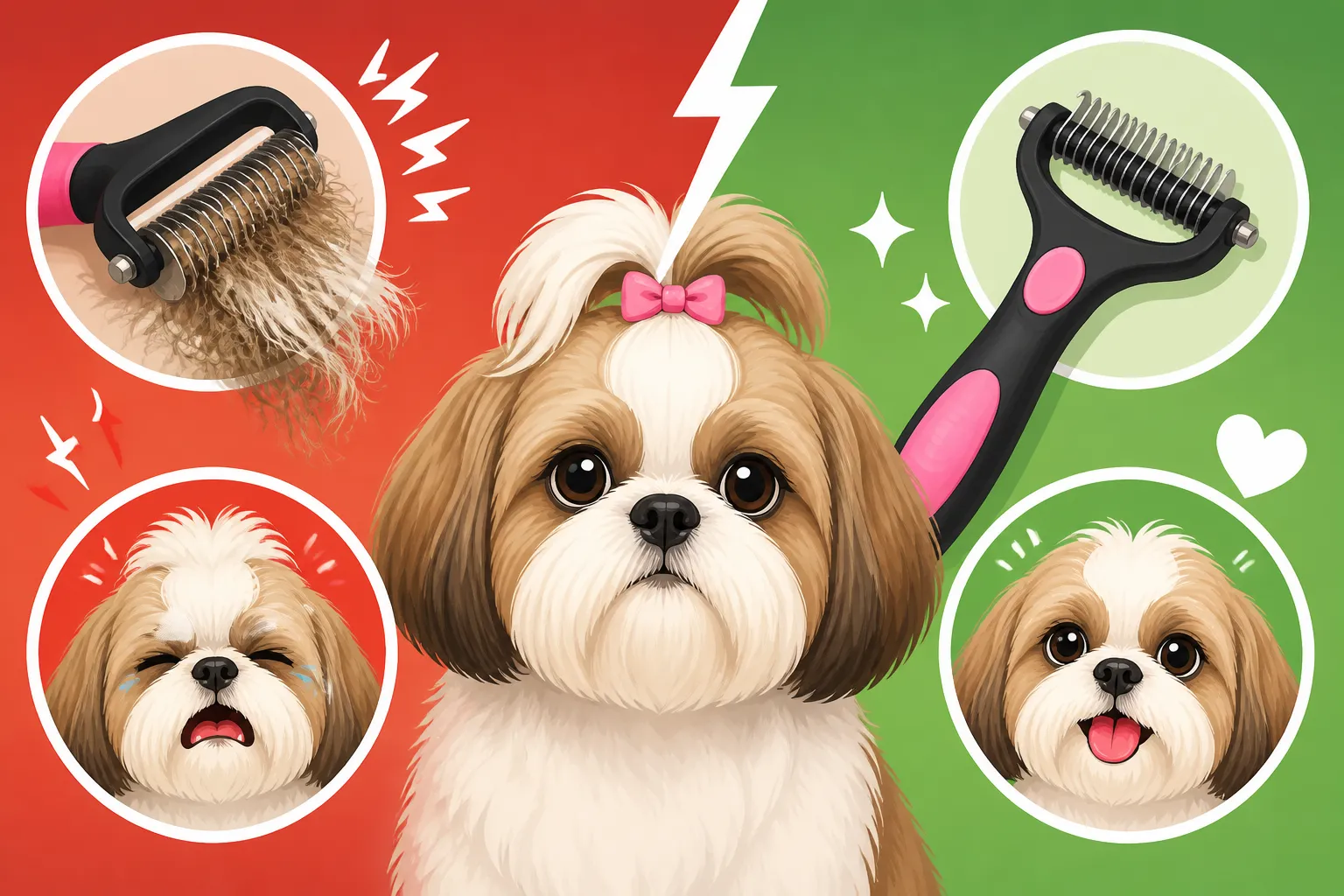
- Dematting Rakes/Combs with Blades: These are often the tools people are most wary of, and for good reason. They feature a series of sharp, curved blades or teeth that are designed to cut through the mat rather than pull it apart. The idea is to break the mat into smaller, more manageable sections, allowing you to brush it out. Brands like Furminator offer various tools, some of which are marketed for dematting. You can find a range of these on platforms like Chewy or Amazon.
- Mat Breakers/Splitters: These usually have one or two razor-sharp blades designed to slice through a mat, literally splitting it into pieces. They are highly effective but also carry the highest risk of cutting the skin if not used with extreme caution.
- Slicker Brushes (Firm): While not exclusively "dematting tools," a firm slicker brush can be crucial in working out smaller mats or the remnants of larger ones after they've been broken up. Their fine, bent wires are good for getting through the undercoat.
- Wide-toothed Combs: Essential for finishing work, a wide-toothed comb helps you ensure all tangles are gone and can also be used to gently tease apart smaller, looser mats.
The key takeaway here is that many of these tools involve blades or sharp edges. This is why careful application is paramount.
The Fine Line Between Helping and Hurting
A dematting tool itself isn't inherently painful for your Shih Tzu. What causes the pain is how it's used. Imagine trying to untangle a knotted mess of your own hair by just yanking a comb through it. It would hurt, right? The same applies to your dog, but their skin is much more delicate, especially when pulled taut by a mat.
- Pulling vs. Cutting: If you simply rake a dematting tool through a large, tight mat without supporting the skin or working slowly, you will pull on your Shih Tzu's skin. This is incredibly painful and can lead to skin irritation, redness, and even tears. The dog will quickly associate the grooming process with pain, making future sessions a struggle.
- Skin Trauma: Because a Shih Tzu's skin is so thin and often hidden beneath layers of hair, it’s easy to accidentally nick or cut it with a bladed dematting tool if you’re not careful. This is especially true with tight mats that pull the skin up into the mat itself.
- Fear and Aversion: A painful dematting experience can create a lasting fear of grooming tools and handling. Your Shih Tzu may become defensive, growl, or even try to bite, not because they are "bad," but because they are anticipating pain.
The goal with any dematting effort is to minimize discomfort. If a mat is so tight that you can't get a dematting tool into it without significantly pulling the skin, or if your dog shows extreme discomfort, it's time to re-evaluate your approach. Sometimes, the kindest thing you can do is avoid a dematting tool and seek professional help. This is often the case when a mat has become truly solid and pulls the skin so tight that it can cause a "skin tent," where the skin is actually incorporated into the mat. In such cases, When a Shih Tzu Mat Has to Be Shaved Out by a professional is often the only humane option.
Safe Dematting Techniques for Your Shih Tzu
If you've decided to tackle a mat yourself with a dematting tool, proceeding with caution, patience, and the right technique is absolutely crucial to prevent hurting your Shih Tzu.
Preparation is Key: Sprays and Sectioning
Before you even pick up a dematting tool, you need to set the stage for success and minimize stress for your Shih Tzu.
- Start with Brushing (Around the Mat): Don't go straight for the mat. First, gently brush out any loose hair and tangles around the mat. This isolates the problem area and prevents pulling on surrounding hair when you work on the mat itself. Use a good quality slicker brush and a metal comb.
- Apply Detangling Spray: A high-quality detangling spray is your best friend here. Liberally spray the mat, working it into the hair with your fingers. Let it sit for a few minutes to soften the hair and make it more pliable. Products from brands available on Chewy or Amazon can make a big difference in how easily a mat can be loosened. Check out Detangler Sprays That Work on a Shih Tzu for more recommendations.
- Gather Your Tools: Have your dematting tool, a fine-toothed metal comb, a wide-toothed comb, and your slicker brush ready. You'll likely use all of them in sequence.
- Find a Comfortable, Secure Spot: Your Shih Tzu needs to be comfortable and, ideally, unable to wiggle too much. A non-slip grooming table is ideal, but a stable counter or even your lap (if your dog is calm) can work. You need both hands free. Teaching your Shih Tzu Two Hours on the Table and a Patient Shih Tzu can be a game changer for grooming.
Section by Section, Gently Does It
This is where the real work, and the potential for pain, lies. Your mantra should be "slow and steady wins the race," with an emphasis on gentle movements.
- Isolate the Mat: Use your fingers to gently separate the mat from the surrounding healthy hair. Hold the hair closest to your Shih Tzu's skin firmly between your fingers and thumb. This creates a barrier, preventing the tool from pulling on the skin as you work. This is perhaps the most critical step to prevent pain.
- Work the Edges First: Do not try to plunge the dematting tool into the center of a dense mat. Instead, start at the very edge of the mat, at the tip of the hair, and work your way inward, little by little.
- Use the Dematting Tool Carefully: If using a bladed rake, slide it into the mat from the outside edge. Make short, gentle, upward strokes, using a wrist flicking motion. The blades should slice through the mat, breaking it into smaller sections, rather than ripping it. Think of it like carefully shredding paper, not tearing it. For mat splitters, use extreme caution and only a very small, precise motion to slice a tiny portion of the mat.
- Comb Through Small Sections: After each pass with the dematting tool, use a wide-toothed comb to gently try and comb out the loosened hair. If you meet resistance, go back with the dematting tool to further break up that section. Then switch to a fine-toothed comb once the mat is mostly gone. You're basically working the mat from the outside in, and from the tips of the hair down to the skin, never forcing the comb through. This method is crucial when Working a Shih Tzu Coat in Sections.
- Be Patient, Take Breaks: Dematting is time-consuming. If your Shih Tzu gets restless or shows signs of discomfort, stop. Give them a treat, a cuddle, or even a short break. Pushing them through pain will only make future grooming harder.
Knowing When to Stop and When to Get Help
Sometimes, despite your best efforts, a mat is just too stubborn, too tight, or too close to the skin for you to safely remove at home. Recognizing your limits is a sign of a responsible pet owner.
- Extreme Tightness: If the mat is so dense that you can barely get your fingers underneath it to protect the skin, or if the skin itself appears to be pulled into the mat (creating a "skin tent"), attempting to cut or comb it out yourself is very risky. You could easily cut your Shih Tzu's skin.
- Dog's Discomfort: If your Shih Tzu is actively struggling, crying, growling, or trying to bite, they are telling you they are in pain. Pushing through this will only traumatize them further and make them fear grooming.
- Hidden Irritation: Sometimes, mats can hide underlying skin infections, hot spots, or parasites. Trying to demat over an already irritated area will cause immense pain and could worsen the skin condition.
- Size and Location: Very large mats, or mats in sensitive areas like the ears, groin, or close to the eyes, are often best left to a professional. A Shih Tzu That Bites During Eye Wiping highlights the sensitivity of this area.
If you encounter any of these situations, the kindest and safest course of action is to stop and schedule an appointment with a professional groomer or your veterinarian. They have specialized tools, training, and experience to handle severe matting safely, often by carefully shaving the mats out. They might even recommend a complete "shave down" to give your Shih Tzu a fresh start. This might sound drastic, but it's often far less traumatic than a prolonged, painful dematting session at home.
Alternatives to Dematting Tools and Prevention
While dematting tools have their place, the best approach is always prevention. By incorporating consistent grooming habits and making smart choices about their coat, you can drastically reduce the need for aggressive dematting and keep your Shih Tzu comfortable and happy.
The Power of Daily Brushing: Your First Line of Defense
Seriously, this cannot be stressed enough: daily brushing is the single most effective way to prevent mats in a Shih Tzu. Their long, double coat requires consistent attention.
- Short, Daily Sessions: Aim for at least 10-15 minutes of brushing every single day. Even if you think their coat looks fine, a quick run-through can catch tiny tangles before they escalate.
- Line Brushing Technique: Don't just brush the top layer. You need to get down to the skin. Part the hair in small sections and brush from the skin out, working your way across the body. This ensures you're reaching the dense undercoat where mats often start. This is covered in more detail in Brushing a Shih Tzu Double Coat Every Single Day.
- The Right Tools: Invest in a good quality slicker brush, a metal comb (with both wide and fine teeth), and a detangling spray. These are your essential everyday grooming items, easily found on Amazon or Chewy. Home Grooming Tools a Shih Tzu Needs can guide your choices.
- Focus on Problem Areas: Pay extra attention to those common mat traps: behind the ears, armpits, groin, and under any harness or collar. A quick check and brush in these spots daily can prevent a lot of headaches.
Consistent daily brushing makes it much easier to maintain your Shih Tzu's coat, reducing the need for stressful dematting sessions. It also turns grooming into a positive, bonding experience rather than a dreaded chore.
Professional Grooming: When to Enlist the Pros
Even with diligent home care, many Shih Tzu owners rely on professional groomers, and for good reason. They are skilled in handling difficult coats and can often prevent mats before they become serious issues.
- Regular Appointments: Schedule professional grooming sessions every 4-6 weeks. This regular maintenance schedule helps keep the coat in top condition and prevents mats from forming. A consistent schedule is discussed in Grooming a Shih Tzu Every Four to Six Weeks.
- Mat Identification and Removal: Professional groomers are experts at spotting incipient mats and have the experience and tools to remove them safely and efficiently. They are far less likely to accidentally nick skin than an inexperienced owner.
- Health Checks: During a grooming session, a professional will also inspect your Shih Tzu's skin, ears, and paws, potentially spotting issues like ear infections or skin irritations that might be hidden by a long coat.
- Specialized Shampoos and Conditioners: Groomers use high-quality products specifically designed for double coats, which help keep the hair healthy, soft, and less prone to tangling.
Don't feel like you've failed if you need a professional. They are a valuable partner in keeping your Shih Tzu well-groomed and comfortable.
The Puppy Cut as a Matting Solution
For many Shih Tzu owners, the battle with mats becomes too much, leading them to opt for a shorter, more manageable haircut. The "puppy cut" is a popular choice for this very reason.
- Reduced Matting: By keeping the coat trimmed short (typically 1-2 inches all over), you drastically reduce the surface area available for mats to form. This means less brushing, fewer tangles, and a much more comfortable dog.
- Easier Maintenance: A puppy cut requires less daily brushing, making home grooming quicker and simpler. You'll still need to brush regularly to prevent tangles, but it's far less intensive than maintaining a full, flowing coat.
- Cooler in Summer: A shorter coat can also help your Shih Tzu stay cooler in warmer weather, which is an important consideration for a brachycephalic breed. Read more about this in The Puppy Cut and What It Saves.
- Still Adorable! While it changes their traditional appearance, a puppy cut is incredibly cute and still showcases their sweet personality. It’s also often referred to as a "teddy bear cut." If you're considering this, you can learn more about Choosing Between a Full Coat and a Puppy Cut.
| Matting Strategy | Pros | Cons | Best For |
|---|---|---|---|
| Daily Brushing | Prevents mats, promotes bonding, maintains coat health and appearance. | Requires daily commitment, can be time-consuming for full coats. | All Shih Tzus, essential for preventing problems. |
| Dematting Tools | Can break up small-to-medium mats at home, potentially saving the coat. | High risk of pain and skin injury if used incorrectly, can traumatize the dog, not suitable for tight mats. | Small, loose mats in calm dogs with experienced, careful owners. |
| Professional Grooming | Expert mat removal, full coat maintenance, skin checks, less stress for owner. | Costs money, requires regular scheduling. | Regular maintenance, severe matting, owners uncomfortable with tools. |
| Puppy Cut | Drastically reduces matting, easier home maintenance, can keep dog cooler. | Changes traditional appearance, still requires some brushing to prevent tangles. | Owners tired of matting battles, active dogs, warmer climates. |
Ultimately, keeping your Shih Tzu mat-free is an ongoing commitment. Whether you choose meticulous daily brushing, regular professional grooming, or a stylish puppy cut, the goal is always your dog's comfort and well-being.
Disclaimer
This article is for general informational purposes only and does not constitute professional advice. Laws, prices and regulations vary by location and change over time. Consult a qualified professional for guidance on your specific situation.