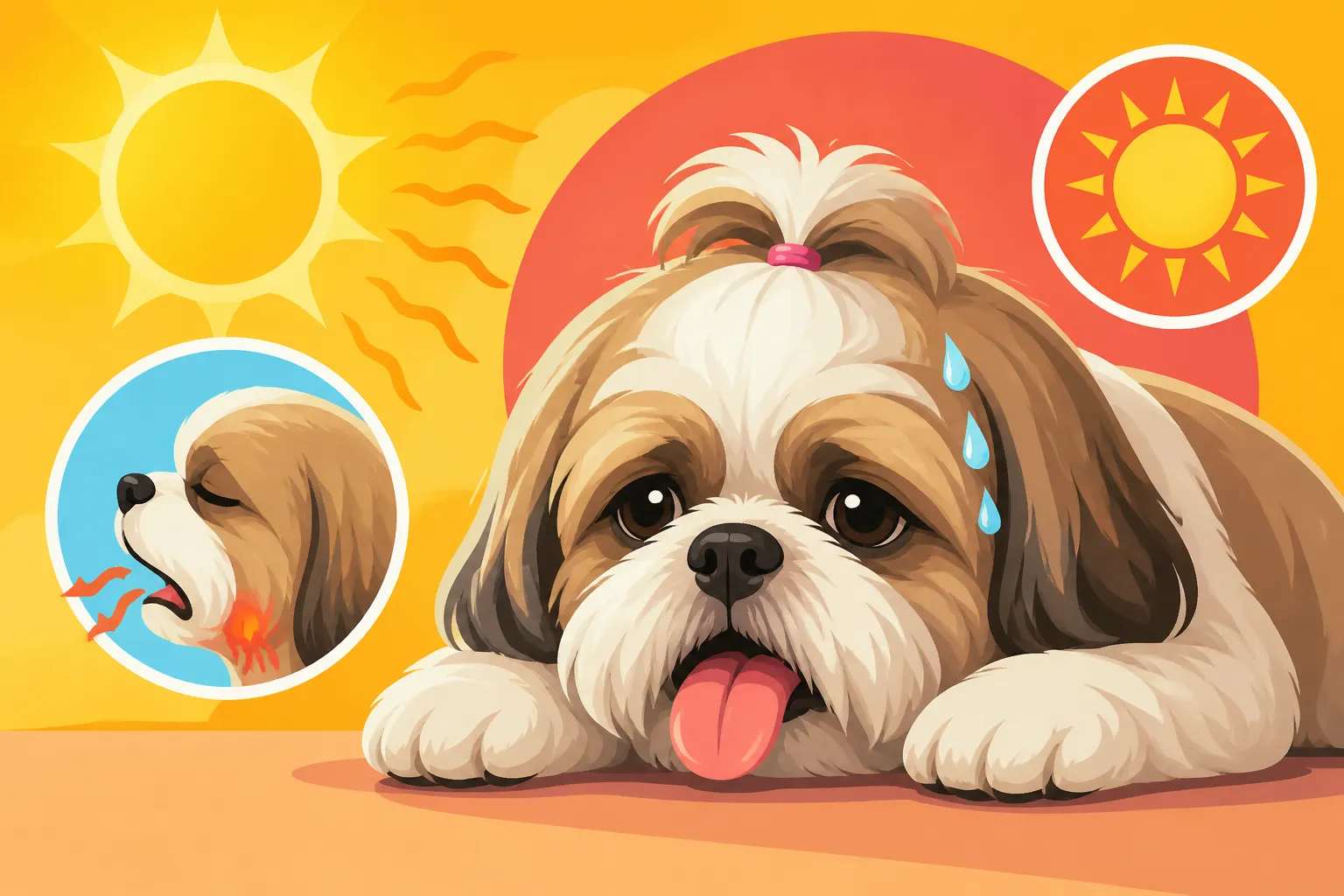
Why a Shih Tzu Overheats in Summer
It's heartbreaking to watch your precious Shih Tzu panting heavily, refusing to walk, and clearly struggling when the temperatures rise. Many of us know that gut-wrenching feeling of dread as summer approaches, knowing our furry companions, with their adorable squished faces and flowing coats, are particularly vulnerable to the heat. This guide is here to shed light on exactly why Shih Tzus overheat so easily and, more importantly, equip you with the knowledge to keep your beloved little lion dog safe and comfortable, even on the hottest days.
The Unique Physiology of a Shih Tzu
Understanding why Shih Tzus are so prone to overheating starts with a look at their unique physical characteristics. These traits, while contributing to their undeniable charm, also present significant challenges when it comes to regulating their body temperature, especially in warm weather. It’s not just a matter of "being hot"; it's a complex interplay of anatomical features that put them at a disadvantage.
Brachycephalic Airway Syndrome
The most significant factor contributing to a Shih Tzu's heat intolerance is their brachycephalic (flat-faced) anatomy. This isn't just a cute facial structure; it means they have a compressed upper respiratory system. Imagine trying to breathe through a straw, all the time, even when just walking around. That's a bit like what a Shih Tzu experiences, and it becomes far more difficult when they need to cool down. Their snouts are shorter, their nostrils (stenotic nares) are often narrowed, and they frequently have an elongated soft palate that can partially block their airway. These structural issues make it hard for air to move efficiently in and out of their lungs.
When a Shih Tzu gets hot, their primary way to cool down is by panting. Unlike humans who sweat all over, dogs rely on evaporating moisture from their tongues and respiratory tracts. But for a brachycephalic dog, the air they pant has trouble getting deep enough into their lungs to effectively exchange heat. The constricted airways create turbulence, which actually generates more heat, creating a dangerous cycle. It's like a car engine trying to cool itself with a radiator that's half-blocked; it just can't keep up. This condition is often referred to as Brachycephalic Breathing in a Shih Tzu, and it's a constant consideration for owners.
Dense Double Coat
Another factor that makes Shih Tzus heat magnets is their glorious double coat. While beautiful and protective in colder climates, keeping them warm and dry, it acts like a thick winter jacket in the summer. They have a soft, dense undercoat and a longer, coarser outer coat. This combination, when left long and unmanaged, traps heat close to their body, preventing air from circulating against their skin. It's a natural insulator, which is fantastic when they're curled up by a fireplace, but detrimental when the sun is blazing.
Many owners mistakenly believe that shaving their Shih Tzu completely will solve the problem. While a shorter cut can certainly help, a full shave can actually expose their sensitive skin to sunburn and make their internal temperature regulation even more complicated, as their natural protection is gone. It's a delicate balance to strike between maintaining their coat's protective qualities and ensuring they don't become dangerously hot. Regular Brushing a Shih Tzu Double Coat Every Day is crucial, even if you keep their coat shorter, as matted hair exacerbates heat retention.
Inefficient Panting Mechanism
As mentioned, panting is a dog's primary cooling mechanism. However, for a Shih Tzu, this process is significantly less efficient than in breeds with longer snouts. When a dog pants, air rushes over the moist surfaces of their tongue and respiratory tract, and as the moisture evaporates, it carries heat away from the body. Think of it like a swamp cooler. For a Shih Tzu, the short muzzle means there's less surface area for this evaporation to occur effectively. Their breathing passages are already narrowed, forcing them to work harder to pull air in and push it out.
This increased effort generates more body heat, making their panting a less effective cooling method. They can also experience something called "reverse sneezing" more frequently when trying to manage their breathing, which, while usually harmless, indicates their respiratory system is under stress. They simply don't have the same capacity to cool themselves down as a Golden Retriever or a Border Collie. This inherent difficulty in effective cooling is a major reason Why a Shih Tzu Cannot Cool Itself Well in hot conditions.
Environmental Factors That Exacerbate Overheating
It's not just about your Shih Tzu's unique build; the environment they're in plays a huge role in their risk of overheating. Even with the best intentions, certain conditions can quickly turn a pleasant day into a dangerous situation for your furry friend. Understanding these external factors is key to preventing heat-related emergencies.
High Temperatures and Humidity
The most obvious culprit is, of course, high ambient temperature. When the air itself is hot, it's harder for your Shih Tzu to dissipate heat from their body. Their core temperature starts to climb just by existing in a warm environment. But what many owners don't realize is that humidity is often an even greater danger. Humidity in the air prevents the evaporative cooling process from working effectively. If the air is already saturated with moisture, the moisture on your Shih Tzu's tongue and respiratory tract can't evaporate as readily.
This means their panting, already inefficient due to their brachycephalic structure, becomes almost useless in humid conditions. Think of how much harder it is for a human to cool down on a humid day versus a dry, hot day, even if the temperature is the same. For a Shih Tzu, this effect is amplified. A 75-degree Fahrenheit day with 90% humidity can be far more dangerous than an 85-degree day with low humidity. Always check both the temperature and the humidity levels before taking your Shih Tzu outside or leaving them in a warm room.
Heat Absorption from Surfaces
The ground your Shih Tzu walks on can become incredibly hot, often reaching temperatures much higher than the air. Asphalt, concrete, and even dark-colored paving stones absorb and retain heat from the sun. On a sunny 85°F day, asphalt can easily reach 130-150°F. Imagine walking barefoot on that! Your Shih Tzu, being low to the ground, isn't just feeling the air temperature; they're absorbing radiating heat from these scorching surfaces through their paw pads and their entire body. This ground heat significantly contributes to their overall body temperature rise.
Beyond their paws, which can suffer painful burns, the heat radiating off the ground warms their entire undercarriage and chest area, directly impacting their core temperature. This is why even a short walk on a hot sidewalk can be dangerous. It's crucial to test the pavement with the back of your hand for at least five to ten seconds before letting your Shih Tzu walk on it. If it's too hot for your hand, it's definitely too hot for their paws. This concept is explored more in Pavement Heat Under a Shih Tzu Foot.
Lack of Air Circulation
Stagnant air is a Shih Tzu's enemy in warm weather. A closed room, a car, or even a shaded outdoor area without a breeze can quickly become a heat trap. Air circulation helps dissipate heat from their surroundings and aids in the evaporative cooling from their panting. Without it, the hot, moist air they exhale simply hovers around them, making it even harder to cool down. This is particularly true in small, enclosed spaces.
Even indoors, if you rely on air conditioning but have rooms where the air doesn't move well, your Shih Tzu can still struggle. A fan, even if it's just moving warm air, can make a significant difference by creating a breeze that helps with evaporation and heat dispersion. Think about how a ceiling fan helps cool a room even without changing the thermostat. For a Shih Tzu, this simple movement of air can be a lifesaver, making their inefficient panting just a little bit more effective.
Signs and Symptoms of Overheating
Recognizing the signs of overheating in your Shih Tzu is absolutely critical. They can't tell you they're feeling unwell, and their small size and dense coat can sometimes mask the severity of their condition until it's too late. Being vigilant and knowing what to look for can make all the difference in a heat-related emergency.
Early Warning Signs
The first signs of overheating can be subtle, and it's easy to dismiss them if you're not paying close attention. The most common early indicator is excessive panting – panting that is heavier, faster, and more labored than usual after minimal exertion. This isn't just "breathing hard"; it's a frantic effort to move air. You might also notice their tongue appearing a darker red or purplish color, indicating reduced oxygenation. Their gums might also be unusually red. Another clear sign is seeking shade or refusing to move. Your normally playful Shih Tzu might flop down and resist any attempts to get them to walk or play.
Beyond panting, watch for changes in behavior. They might become lethargic, stumbling, or appear disoriented. Their eyes might seem glassy or unfocused. Some Shih Tzus might start drooling excessively, producing thick, ropey saliva as their body tries to cool down. You might also notice their skin, particularly around their ears or under their fur, feels excessively hot to the touch. Any combination of these symptoms, especially after time in the heat or exercise, should immediately prompt you to take action. Ignoring these early cues is incredibly dangerous for a breed so prone to heat stress.
Advanced Stages and Heatstroke
If the early warning signs are missed or ignored, a Shih Tzu can quickly progress to advanced stages of overheating, which is classified as heatstroke. Heatstroke is a severe and life-threatening condition where the body's temperature regulation system fails, leading to a dangerously high core body temperature. At this point, the symptoms become much more alarming. You might see vomiting or diarrhea, sometimes with blood. Their breathing can become extremely distressed, characterized by noisy, gasping breaths or even shallow, rapid breathing.
Muscle tremors, seizures, and a complete collapse are all hallmark signs of heatstroke. Their gums might turn pale, blue, or even bright brick-red, and their capillary refill time (how quickly color returns after pressing a gum) might be prolonged. At this stage, organ damage, including kidney failure, brain swelling, and disseminated intravascular coagulation (a severe blood clotting disorder), is a very real risk. The body's systems begin to shut down under the extreme stress of sustained high temperatures. The progression from mild overheating to life-threatening heatstroke can happen frighteningly fast in a Shih Tzu.
When to Seek Emergency Vet Care
If you suspect your Shih Tzu is overheating, even if they only show mild symptoms, always err on the side of caution and contact your veterinarian immediately. If they are exhibiting any signs of advanced heatstroke – collapse, seizures, severe vomiting/diarrhea, or extreme lethargy – this is a dire emergency, and you need to get them to the nearest emergency veterinary clinic without delay. Time is absolutely critical in these situations.
While en route to the vet, you can take some immediate first aid steps to try and lower their body temperature carefully. This includes moving them to a cooler environment, offering small sips of water if they can swallow, and gently wetting their fur (especially armpits, groin, and paw pads) with cool, not ice-cold, water. Do not immerse them in ice water, as this can cause shock and restrict blood vessels, making things worse. Use fans if available. Even if your Shih Tzu seems to recover on the way to the vet, they still need a professional examination to check for internal organ damage that might not be immediately apparent. Remember, Shih Tzu Emergency Vet Costs Owners Should Expect can be substantial, but saving your dog's life is priceless.
Preventative Measures and Summer Care
As devoted Shih Tzu parents, our best defense against overheating is a strong offense: proactive prevention. A little planning and a few adjustments to your daily routine can make all the difference in keeping your furry companion safe and comfortable when the mercury rises.
Adjusting Exercise Routines
During the warmer months, it's absolutely essential to rethink your Shih Tzu's exercise schedule. Those lovely midday strolls you enjoy in spring need to be moved to the cooler parts of the day – early mornings before the sun really heats up, or late evenings after it has set and the ground has cooled down. Even then, keep walks short and at a leisurely pace. Remember, Shih Tzu Exercise Intolerance in Summer is real, and they aren't built for strenuous activity in the heat. A 10-15 minute potty break and a sniff around the yard might be all they can handle.
Consider indoor playtime as an alternative for physical and mental stimulation. Engaging them with puzzle toys or a game of fetch in an air-conditioned space can satisfy their need for activity without risking heatstroke. Always carry water and a portable bowl with you, even on short outings, and offer frequent sips. If you see any signs of heavy panting or slowing down, stop immediately, find shade, and cool them off. The goal is to provide enough activity to keep them happy and healthy without ever pushing them into dangerous territory.
Providing a Cool Environment
Creating a constantly cool environment is paramount for a Shih Tzu. Indoors, air conditioning is your best friend. Keep your home comfortably cool, especially in the rooms where your Shih Tzu spends most of their time. If you don't have AC, use fans to create air circulation, ensuring they have a breeze. You can also strategically place frozen water bottles or ice packs wrapped in towels near their favorite resting spots for extra coolness.
Outdoors, access to shade is non-negotiable. If they are ever outside, even for a short time, they need a consistently shaded area. Never rely on the shade from a tree that might shift with the sun throughout the day; a solid canopy or umbrella is better. Cooling mats are another fantastic investment; these gel-filled mats absorb body heat and provide a cool surface for your Shih Tzu to lie on. You can find excellent options on Amazon or Chewy. Always ensure they have unlimited access to fresh, cool water, refreshing it often, especially if it's sitting outside. A few ice cubes in their water bowl can make it even more appealing.
Hydration and Nutrition Tips
Staying hydrated is key for all dogs, but especially for a Shih Tzu struggling with heat. Always have multiple water bowls available throughout your home, filled with fresh, cool water. Consider adding a splash of bone broth (ensure it's low sodium and dog-safe) to their water to encourage drinking, or even offering ice cubes as a treat. Some dogs enjoy special chilled treats made from dog-safe ingredients like frozen plain yogurt or pureed fruit.
When it comes to meals, ensure their food is appropriate for the season. Some owners find their Shih Tzu prefers slightly less heavy meals in the heat. If you're using fresh food delivery services like Ollie, ensure you're portioning correctly and that the food is always served fresh and cool. Avoid leaving food out for extended periods, as it can spoil quickly in warm weather, and encourage them to eat at cooler times of the day. A well-hydrated dog is better equipped to handle the heat, even with their physiological disadvantages.
Grooming for Warm Weather
Your Shih Tzu's coat, while beautiful, requires special attention in the summer to prevent overheating. While a full shave is generally not recommended as it removes natural insulation and protection against sunburn, a shorter "puppy cut" or "summer cut" can make a world of difference. This involves trimming their body hair to a length that allows for better air circulation while still offering some sun protection. Discuss appropriate lengths with a professional groomer who understands the Shih Tzu coat.
Regular Bathing a Shih Tzu Every Two to Three Weeks with a good quality shampoo and conditioner, followed by thorough drying, can also help keep their coat clean and free of mats, which trap heat. Pay special attention to trimming the hair around their paw pads to prevent slipping and allow for better heat dissipation through their paws. Keeping the hair around their face and eyes trimmed or tied back (a topic covered in Trimming a Shih Tzu Fringe Instead of Tying It) is also important, as long hair can further obstruct their already challenged breathing and vision. Regular brushing, even with a shorter cut, is vital to prevent matting that can hinder air flow to the skin. You can find quality grooming tools and products on Chewy or Amazon.
| Activity / Environment | Recommended for Shih Tzus in Summer | Not Recommended for Shih Tzus in Summer |
|---|---|---|
| Walks | Early morning, late evening (brief) | Midday, long walks |
| Outdoor Play | Shaded yard, water play (supervised) | Direct sun, dog parks (hot asphalt) |
| Indoors | Air-conditioned rooms, fans, cooling mats | Unventilated rooms, garages, sunrooms |
| Travel | Short, AC-controlled car rides | Unattended in car (even with window cracked), cargo plane |
| Grooming | Short 'puppy cut', regular brushing | Complete shave, matted coat |
| Hydration | Constant access to fresh, cool water | Limited water access, warm water |
| Pavement Check | Always use the back of your hand | Assume it's safe if air feels cool |
Common Misconceptions and Dangerous Practices
Despite our best efforts, sometimes our understanding of how to care for our Shih Tzus in the heat can be clouded by myths or simply not knowing the specific risks. Clearing up these misconceptions and avoiding dangerous practices is just as important as implementing preventative measures.
Shaving Down to the Skin
It’s a common, well-intentioned thought: "My Shih Tzu is so hot, I'll shave all their fur off!" While getting a shorter "puppy cut" can be beneficial for heat management, shaving a double-coated breed like a Shih Tzu down to the skin is generally not recommended and can actually cause more harm than good. Their double coat, while appearing thick, serves several purposes beyond just keeping them warm in winter. It also provides a layer of insulation against the heat of the sun, protecting their skin from sunburn and helping to regulate their body temperature.
When you shave a Shih Tzu completely, you remove this natural protective barrier. Their delicate skin is then exposed directly to the harsh UV rays, making them highly susceptible to painful sunburn. Sunburn on a dog can be just as agonizing as it is for humans, and it increases their risk of skin cancers. Furthermore, in some double-coated breeds, shaving can damage the coat follicles, leading to improper regrowth where the coat grows back patchy, uneven, or with a different texture that may be prone to matting or less effective insulation. A shorter, well-maintained trim that still leaves some coat length is usually the safest and most effective approach for summer comfort.
Leaving a Shih Tzu Unattended in a Car
This is one of the most dangerous and, tragically, most common mistakes made by pet owners of all breeds, but it's especially lethal for a Shih Tzu. "Just five minutes" can quickly turn into a deadly situation. Even on a seemingly mild day (e.g., 70°F), the interior of a car can reach dangerous temperatures, well over 100°F, in a matter of minutes. Cracking a window offers minimal relief and is not enough to prevent the temperature from skyrocketing. The sun's rays entering the vehicle create a greenhouse effect, trapping heat and rapidly increasing the internal temperature.
For a brachycephalic breed like a Shih Tzu, whose cooling mechanisms are already severely compromised, being left in a hot car is an almost guaranteed recipe for heatstroke. They simply cannot cool themselves down fast enough, and the enclosed, stagnant air only exacerbates their struggle. Many local laws prohibit leaving pets in hot cars, and bystanders are often empowered to intervene. It's never worth the risk. If your Shih Tzu can't go inside with you, they shouldn't come along in the car for errands on a warm day. Just leave them safely at home in a cool environment.
Ignoring Subtle Signs
We've talked about the early and advanced signs of overheating, but it's vital to stress the importance of never ignoring even the most subtle changes in your Shih Tzu's behavior or breathing patterns when the weather is warm. Because they are so susceptible, what might seem like "just a little panting" or "being a bit tired" in another breed can escalate rapidly into a life-threatening emergency for a Shih Tzu. Their adorable, often stoic nature can sometimes hide their discomfort until it becomes critical.
Don't wait for them to collapse or start vomiting before taking action. If you notice an increase in panting, a slightly darker tongue, a reluctance to move, or any unusual lethargy after being exposed to warmth, act immediately. Move them to a cooler area, offer water, and consider applying cool, damp cloths. Observe them closely. If they don't improve quickly, or if you're ever in doubt, call your vet. It's always better to be overly cautious and make a quick call to the vet or an emergency clinic than to regret not acting sooner. Your Shih Tzu relies on your vigilance for their safety.
Disclaimer
This article is for general informational purposes only and does not constitute professional advice. Laws, prices and regulations vary by location and change over time. Consult a qualified professional for guidance on your specific situation.