A Shih Tzu Sharing a House With Children
Shih Tzu temperament, gentle training, and body language help children safely live with this sensitive, small companion breed.
Is this the right one for you?
Origins and temperament, size and coat, what living with one is actually like, and how it compares to the breeds people weigh against it.
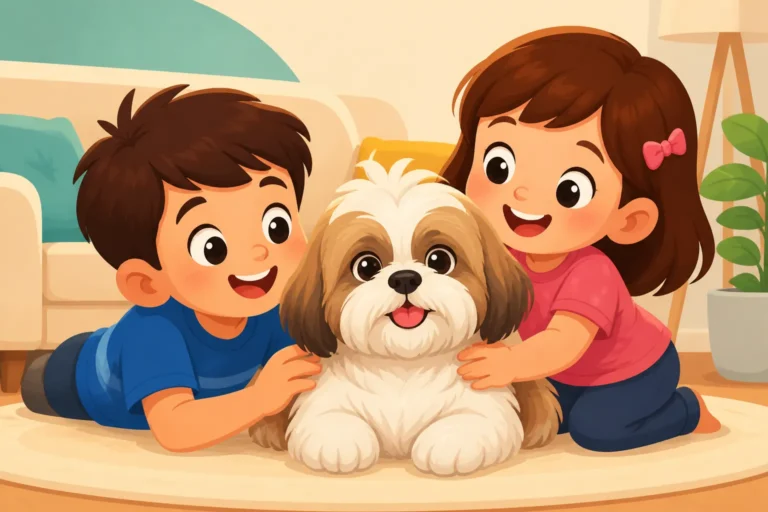
Shih Tzu temperament, gentle training, and body language help children safely live with this sensitive, small companion breed.

The official Shih Tzu breed standard requires an outgoing temperament, defining a confident, friendly companion dog.

Shih Tzu coat genetics and the S locus determine white markings and the distinctive white blaze running down the forehead.

Kennel club standards and genetics explain recognized Shih Tzu coat colors, patterns, and solid shades like black and gold.
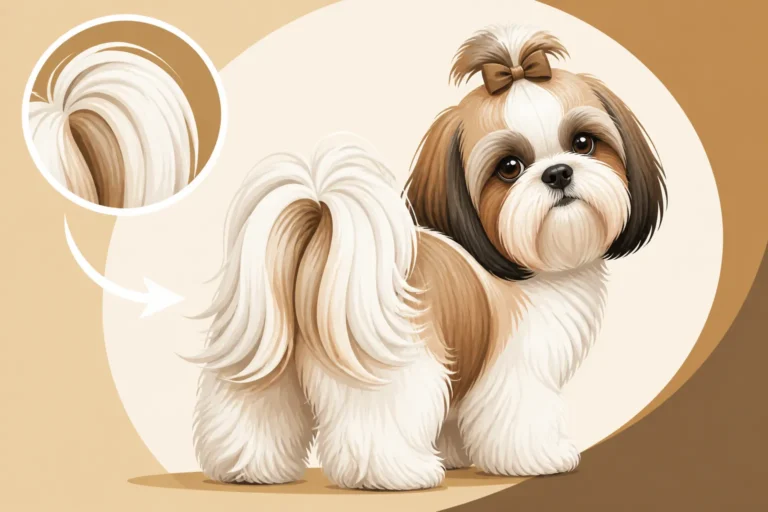
Shih Tzu tail standards, daily grooming care, and history explain the plumed appendage carried high over the back.
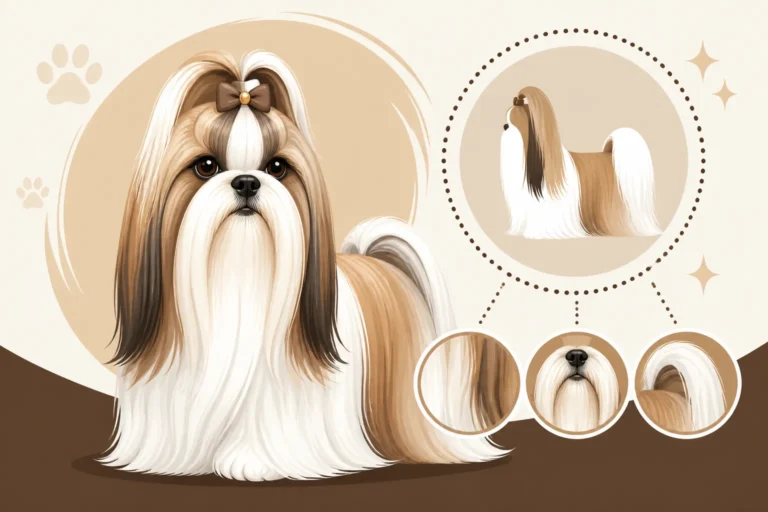
The Shih Tzu double coat features a dense undercoat and longer topcoat, explaining why this breed’s fur mats fast.
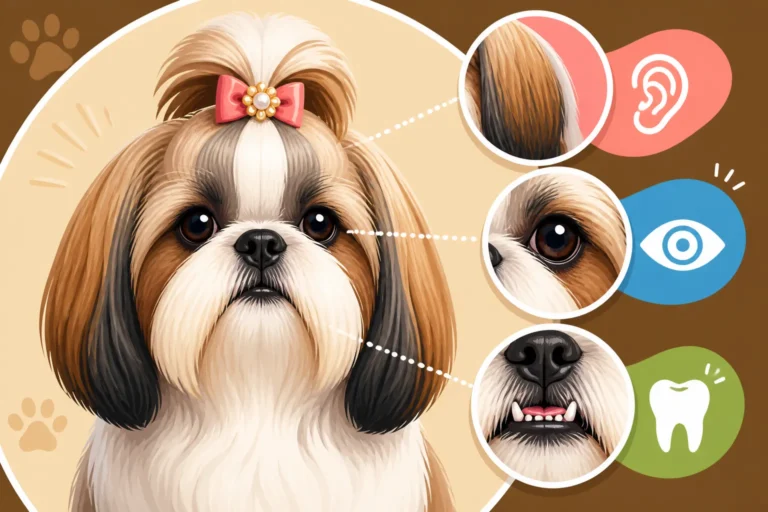
Shih Tzu breed standards for ears, eyes, and bite explain facial features, health considerations, and appearance.
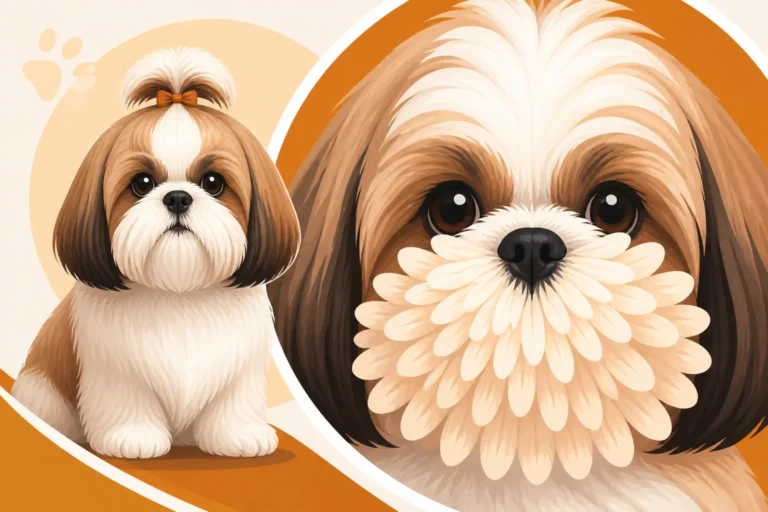
Shih Tzu head anatomy and the chrysanthemum face explain breathing, eye health, and care needs for flat-faced dogs.
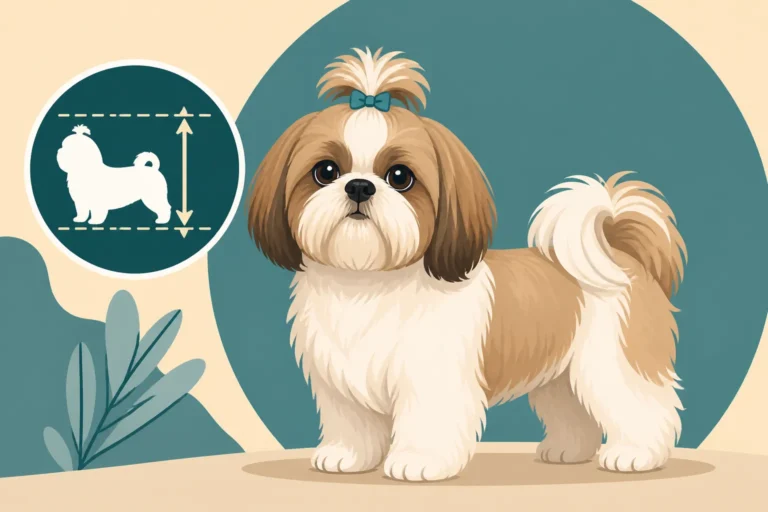
The Shih Tzu breed standard height of nine to ten and a half inches preserves the historical traits of these imperial palace companion dogs.

The American Kennel Club Toy Group classification explains the Shih Tzu health, temperament, and daily care requirements.