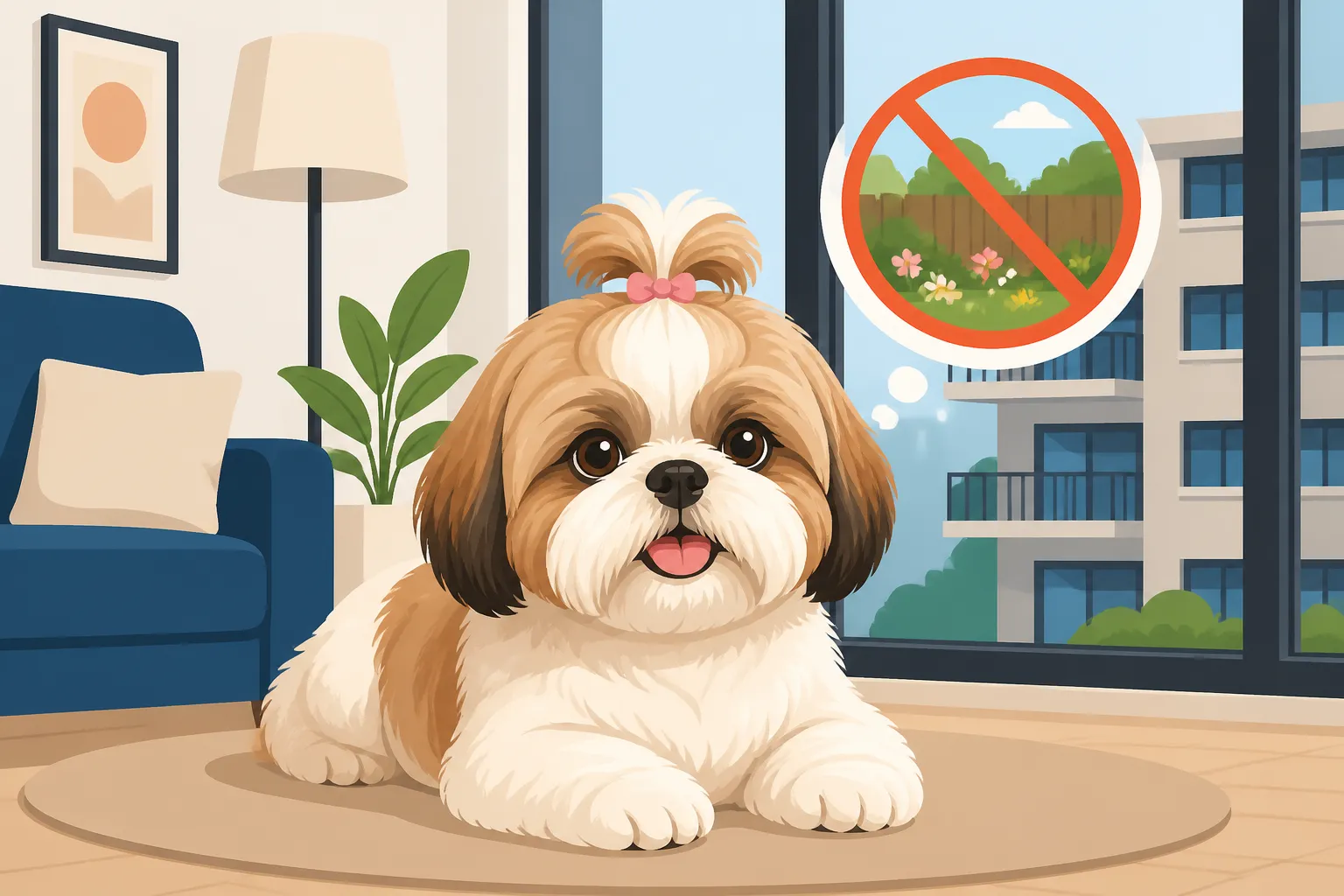
Shih Tzus in Flats Without a Garden
It's a common dream for so many of us: to share our lives with a fluffy, adoring Shih Tzu. But then the reality of city living, or simply not having a sprawling backyard, hits. You start to worry, "Can a Shih Tzu really be happy and healthy in a flat, without a patch of grass to call their own?" The answer, dear friend, is a resounding yes! This guide is here to quell those fears and show you exactly how to create a fulfilling, joyful life for your Shih Tzu, even in the coziest of apartments.
The Perfect Apartment Companion: Why Shih Tzus Excel in Flats
Many prospective owners hesitate, believing that all dogs need a large yard to thrive. But the truth is, a dog's happiness and well-being are far more dependent on consistent human interaction, mental stimulation, and appropriate exercise than on the square footage of their outdoor space. Shih Tzus, in particular, are uniquely suited for apartment living, having been bred for centuries as indoor companions.
Temperament and Lifestyle Match
Shih Tzus were literally bred to be lap warmers and pampered companions within palace walls. They weren't designed to herd sheep, track game, or guard vast estates. Their entire purpose was to provide affection and companionship, making them naturally adaptable to indoor living. They adore being close to their people, thriving on cuddles, short bursts of indoor play, and being included in daily activities. This breed's low exercise requirements mean they don't need acres to run; a comfortable spot on the sofa next to you is often their preferred location. This inherent desire for closeness and their adaptable nature makes them truly shine in environments where they are at the center of their human's world, which is often the case in an apartment setting. You'll find that their calm demeanor indoors, once their needs are met, makes them a joy to share a smaller space with. If you're looking for a dog that genuinely enjoys being a house dog, a Shih Tzu fits the bill perfectly. Their personality aligns wonderfully with the rhythms of urban life, where shared spaces and quiet companionship are highly valued. Shih Tzu Temperament and the Companion It Was Bred to Be delves deeper into their delightful nature.
Size and Space Requirements
Let's be real, a Shih Tzu is a small dog. Typically weighing between 9 and 16 pounds and standing less than a foot tall, they simply don't take up much physical space. A corner for their bed, a designated spot for their food and water bowls, and a safe area for play is often all they need. Unlike larger breeds that can feel cramped and stir-crazy in an apartment, a Shih Tzu often perceives a flat as their entire kingdom. They can get a surprising amount of exercise just by trotting from the living room to the kitchen and back again a few times, chasing a toy down a hallway, or engaging in a spirited game of tug-of-war in a compact space. The lack of a yard often means more dedicated indoor playtime and interaction with their owners, which, for a breed so devoted to its people, is actually a huge bonus. It creates a stronger bond and ensures they receive ample attention. Don't let their long, flowing coats fool you; underneath all that fabulous hair is a compact little body perfectly suited for snuggling up on even the smallest sofa or curling up beside your desk while you work.
Keeping Active Without a Backyard: Exercise Solutions for Your Flat-Dwelling Shih Tzu
Just because Shih Tzus don't need a huge yard doesn't mean they don't need regular exercise. Like all dogs, they benefit immensely from physical activity for their health, mental well-being, and to prevent boredom. The key is to be creative and consistent with how you provide it in an apartment setting.
Making the Most of Outdoor Walks
Daily walks are absolutely crucial for a Shih Tzu living in a flat. These aren't just about potty breaks; they're their primary source of exploration, mental stimulation, and physical activity. Aim for at least two to three short walks a day, each lasting around 15-20 minutes. For an energetic pup or a younger adult, a slightly longer stroll might be in order. Focus on variety: explore different blocks, parks (if permitted and safe), and even local pet-friendly shops. The new sights, sounds, and smells are incredibly stimulating for their brains, helping to burn off energy just as much as physical exertion. Remember that a Shih Tzu's brachycephalic (flat) face makes them sensitive to heat, so plan walks for cooler parts of the day, especially in warmer climates. Always use a harness instead of a collar to protect their delicate neck and airway. A good-quality, comfortable harness is available at retailers like Chewy and makes walks much safer and more enjoyable for your little companion. Why a Shih Tzu Should Wear a Harness Not a Collar offers more insights on this. These walks are your Shih Tzu's window to the world, providing essential enrichment they wouldn't get stuck indoors.
Indoor Games and Mental Stimulation
On days when outdoor conditions aren't ideal (think pouring rain, scorching heat, or icy sidewalks), or simply to supplement outdoor walks, indoor games are your best friend. Shih Tzus, despite their often lazy reputation, are surprisingly clever and enjoy engaging their minds. Puzzle toys, where they have to figure out how to get a treat, are fantastic for mental exercise. Hide-and-seek with toys or treats encourages them to use their noses and problem-solving skills. Fetch in a long hallway, tug-of-war with a sturdy toy, or even simply teaching new tricks like "spin" or "bow" can provide significant physical and mental exertion. Interactive play sessions don't need to be long; short, frequent bursts of 5-10 minutes several times a day can be more effective than one long, exhausting session. These activities not only keep them entertained but also strengthen your bond. Remember, a tired dog, both physically and mentally, is a happy dog, and a happy dog is far less likely to develop destructive behaviors out of boredom. For a deeper dive into effective indoor play strategies, check out Games That Keep a Shih Tzu Busy Indoors.
Potty Training Success: Navigating Elimination in an Apartment
One of the biggest concerns for apartment dwellers with a small dog is potty training. Without the convenience of just opening a back door, it can feel like a daunting challenge. However, with consistency, patience, and the right approach, your Shih Tzu can absolutely master apartment potty etiquette.
Establishing a Consistent Routine
Consistency is paramount when potty training a Shih Tzu in a flat. From the moment you bring your puppy home, or even an adult dog, establish a strict potty schedule. Take them out first thing in the morning, immediately after waking from a nap, within 15-20 minutes of eating or drinking, before bedtime, and periodically throughout the day. The more frequently you take them out in the beginning, the fewer accidents you'll have indoors, and the faster they'll learn. Always go to the same general spot outdoors if possible, as familiar scents can encourage them to go. When they do go potty outside, offer enthusiastic praise and a high-value treat immediately. This positive reinforcement is key to teaching them that outside is the place to do their business. Never punish accidents indoors; simply clean them thoroughly with an enzymatic cleaner to remove odors that might attract them back to the same spot. It might feel like you're on a constant potty parade for a few weeks, but this dedicated routine pays off immensely in the long run. Remember, even older Shih Tzus benefit from a consistent schedule.
Indoor Potty Options: Pads and Grass Patches
While outdoor walks are ideal for socialization and exercise, having an indoor potty solution can be a lifesaver for apartment living, especially for those unexpected moments or when you can't get outside immediately. Potty pads are a popular choice, providing an absorbent surface for your Shih Tzu to relieve themselves. You can find these easily at pet supply stores or online from retailers like Chewy. Place them in a designated, low-traffic area, away from their food and sleeping spots.
Another excellent option, particularly for those who want a more natural feel, are indoor grass patches, either real or artificial. These mimic the texture and smell of real grass, often making the transition easier for dogs.
Here's a quick comparison:
| Feature | Potty Pads | Indoor Grass Patch (Artificial) | Indoor Grass Patch (Real) |
|---|---|---|---|
| Cost | Lower initial, ongoing refills | Higher initial, lower long-term | Higher initial, ongoing refills (if replaceable) |
| Maintenance | Dispose daily, replace as needed | Rinse/clean regularly, replace less often | Dispose/compost daily, replace weekly/bi-weekly |
| Odor Control | Fair, depends on frequency of change | Good, if cleaned regularly | Excellent, if fresh grass is used and replaced |
| Natural Feel | None | Texture, but no natural smell | Closest to real grass, natural smell |
| Training Ease | Generally easy, familiar to many puppies | Often easier for dogs used to grass | Very easy, mimics outdoor experience |
| Portability | High | Moderate (can be bulky) | Low (can be heavy, soil issues) |
When using indoor options, it's crucial not to confuse your Shih Tzu. If your goal is primarily outdoor potty training, use indoor options only as a backup. If you plan for them to consistently use an indoor spot, ensure that's where you always take them. For more on indoor solutions, explore Indoor Grass Trays for a Shih Tzu.
Maintaining a Pristine Pad: Grooming and Cleanliness in Small Spaces
A Shih Tzu's glorious coat is one of their most defining features, but it does come with a commitment to grooming. In a smaller living space, managing their coat, shedding, and general cleanliness becomes even more important to keep your home tidy and your pup healthy.
Regular Grooming: Essential for a Healthy Home
A Shih Tzu's double coat is prone to matting, and if left untended, mats can become painful, pull on their skin, and harbor dirt, leading to skin infections. In an apartment, these mats can also shed loose hair and dander more visibly, accumulating quickly in a compact space. Daily brushing is not just about keeping their coat beautiful; it's a vital part of their health and your home's cleanliness. Invest in a good quality slicker brush and a metal comb. Work through their coat in sections, ensuring you reach all the way down to the skin to remove any loose undercoat and prevent tangles. Pay special attention to areas behind the ears, under the legs, and where a harness sits, as these are prime matting zones. Beyond brushing, regular professional grooming every 4-6 weeks is often a necessity, especially if you opt for a longer coat. A professional groomer can give them a thorough wash, clip, and detangle that's hard to achieve at home in a small bathroom. You can find excellent grooming tools and even appointment booking for local services through platforms like Chewy. For guidance on daily coat care, check out Brushing a Shih Tzu Double Coat Every Day.
Managing Shedding and Accidents
While Shih Tzus are often touted as low-shedding, they do shed, particularly their undercoat. In a flat, this hair can feel more noticeable. Regular brushing drastically reduces the amount of loose hair that ends up on your furniture and floors. For accidents, whether it's a potty mishap or food dropped from their beard, prompt and thorough cleaning is key. Keep pet-safe enzymatic cleaners on hand to neutralize odors and discourage repeat incidents. For their facial hair, which can often get wet or food-stained, a daily wipe-down is essential to prevent tear stains and beard crust. Washing a Shih Tzu Face After Every Meal provides helpful tips. If your Shih Tzu has a longer coat, consider a "puppy cut" or a shorter trim. This makes daily maintenance much easier, reduces the amount of hair that can drag on the floor and pick up debris, and makes it simpler to spot any skin issues that might develop. A shorter cut can be a game-changer for cleanliness in a small living space, without compromising their adorable appearance.
Thriving in the City: Socialization and Safety for Urban Shih Tzus
City living comes with its own unique set of sights, sounds, and experiences. For a Shih Tzu, ensuring proper socialization from a young age and implementing smart safety measures are crucial for their well-being and confidence in an urban environment.
Exposing Your Shih Tzu to the World
Living in a flat means your Shih Tzu will be exposed to a symphony of city noises: sirens, traffic, bustling crowds, and the constant ebb and flow of people. Early and positive socialization is absolutely vital. From puppyhood, gently expose your Shih Tzu to these various stimuli. Carry them in a carrier or hold them while you sit on a park bench, letting them observe the world from a safe distance. Introduce them to different types of people (kids, adults, people with hats or strollers) and other calm, vaccinated dogs in controlled environments. Puppy classes are excellent for this, providing structured opportunities for positive interactions. The goal isn't to make them fearless, but to help them feel comfortable and secure in their surroundings, understanding that most noises and encounters are benign. A well-socialized Shih Tzu is a confident Shih Tzu, less likely to develop anxiety or reactive behaviors, making apartment life far more enjoyable for everyone. Even an adopted adult Shih Tzu can benefit from a gentle, gradual socialization plan to help them adjust to their new urban life. The Sounds a Shih Tzu Puppy Needs to Meet offers more guidance on this.
Safety Considerations for City Living
Urban environments present specific safety challenges that apartment owners need to be aware of. When walking your Shih Tzu, always keep them on a leash and harness. City streets can be unpredictable, with sudden traffic, loose dogs, or discarded items that could be harmful. Even a quick dash for a squirrel could lead them into danger. Be mindful of their small size; larger dogs might not see a Shih Tzu, so teach your dog a solid "leave it" command and always be vigilant. Consider a pet stroller for longer outings in crowded areas or when pavement temperatures are too high, protecting their delicate paws and short snout. For high-rise dwellers, balcony safety is paramount; ensure railings are secure and gaps are too small for a curious pup to slip through. When traveling, particularly in warmer months, remember that flat-faced breeds can overheat easily. Always have water available and avoid leaving them in parked cars, even for a short time. Having a plan for emergencies, like knowing the location of the nearest 24-hour veterinary clinic, is also a smart move for any pet owner, especially those in bustling urban areas.
Disclaimer
This article is for general informational purposes only and does not constitute professional advice. Laws, prices and regulations vary by location and change over time. Consult a qualified professional for guidance on your specific situation.