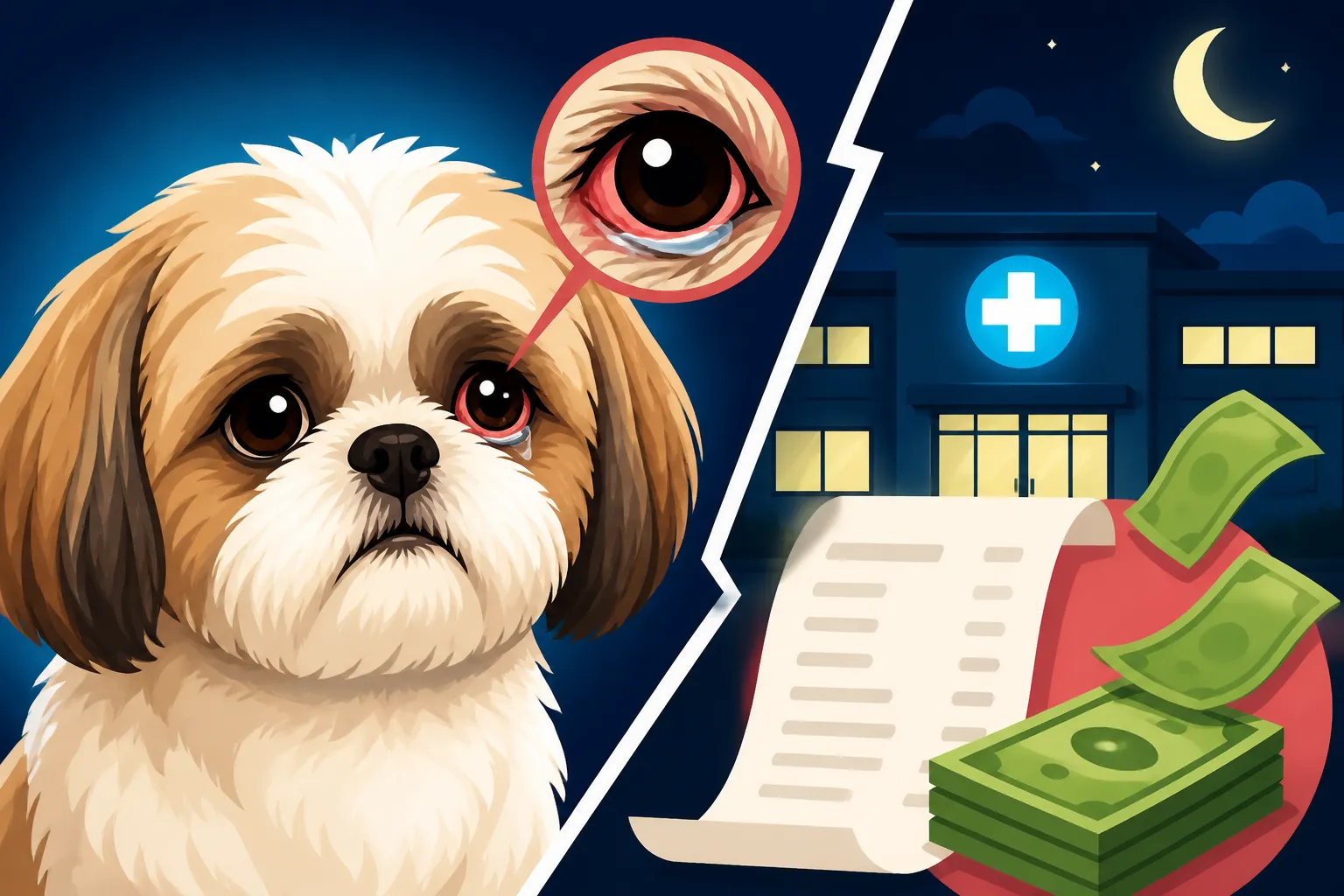
The After-Hours Bill for a Shih Tzu Eye
There's nothing quite as heart-stopping for a Shih Tzu owner as seeing their beloved companion with an eye problem, especially when it happens after your regular vet's office has closed for the day. That sudden panic, the rush of anxiety, and the immediate worry about your little one's vision are completely understandable. This guide is here to walk you through the realities of after-hours veterinary care for Shih Tzu eye issues, what to expect in terms of expenses, and how you can best prepare for these unexpected emergencies.
Understanding Shih Tzu Eye Vulnerabilities
Shih Tzus are absolutely adorable, with their expressive, often bulging eyes and long, flowing facial hair. It's these very features, however, that make their eyes particularly susceptible to a range of issues. Their unique brachycephalic (flat-faced) anatomy plays a significant role in their ocular health.
Why Shih Tzus Are Prone to Eye Issues
The distinctive look of a Shih Tzu, with its short snout and prominent eyes, comes with a set of predispositions. Their eye sockets are shallower than many other breeds, meaning their eyes don't sit as deeply and are more exposed to the elements and potential trauma. This anatomical quirk makes conditions like "Shih Tzu Eye Proptosis, the Emergency Owners Miss" a real and terrifying possibility. A sudden jolt, a minor bump, or even enthusiastic rough play can, in rare but alarming cases, cause an eye to partially or fully dislodge from its socket. It's a truly frightening sight, often leaving owners feeling helpless and panicked.
Beyond proptosis, the sheer prominence of their eyes means they're more vulnerable to accidental scratches or foreign objects. Their long facial hair, while beautiful, can sometimes irritate the cornea if not meticulously maintained, leading to issues like "Shih Tzu Corneal Ulcers and Dry Eye." Even eyelashes growing inwards, a condition known as entropion, can constantly abrade the eye surface. Many Shih Tzus also contend with "Dry Eye in a Shih Tzu and Lifelong Drops" because their eyelids don't always close completely over their large eyes, leading to chronic dryness and irritation. Keeping the hair around their eyes trimmed is crucial, as this long hair can often cause irritation or even lead to serious corneal damage. For more on this, check out "Why Hair in the Eye Damages a Shih Tzu Cornea."
Recognizing an Eye Emergency
Knowing what constitutes an immediate eye emergency is paramount for any Shih Tzu owner. Time is often of the essence in these situations to preserve vision and prevent further damage. Here are some critical signs that absolutely warrant an after-hours visit to an emergency veterinary clinic:
- Sudden Bulging or Protrusion of the Eyeball: This is a classic sign of proptosis. If you see "What Shih Tzu Proptosis Actually Looks Like," you'll know it's a critical situation. The eye will appear to be sticking out of its socket, often with visible tissue around it.
- Extreme Pain or Discomfort: Your dog might be squinting severely, pawing at their eye relentlessly, rubbing their face on furniture, or even crying out when the eye area is touched. They might become withdrawn or aggressive due to pain.
- Rapid Swelling Around the Eye: Any sudden, noticeable swelling of the eyelids or the tissue surrounding the eye could indicate trauma, an infection, or even an allergic reaction, all of which need immediate attention.
- Changes in Eye Appearance: This includes a cloudy or blue appearance ("A Shih Tzu Eye That Suddenly Turns Blue"), a sudden reddish tint, unusual discharge (thick, green, or yellow), or if the pupil appears dilated or constricted unnaturally. "Pigmentary Keratitis in a Shih Tzu" can also cause a dark film to spread across the cornea, impacting vision.
- Inability to Open the Eye: If your Shih Tzu is unable or unwilling to open their eye, it's a clear indicator of significant pain or damage.
- Bleeding: Any visible blood in or around the eye is an immediate red flag.
- Loss of Vision: While harder to detect in an emergency, if your dog is suddenly bumping into things or disoriented, especially on one side, it could signal acute vision loss.
If you observe any of these symptoms, don't wait for your regular vet to open. Head straight to the nearest emergency veterinary clinic.
The Real Cost of an After-Hours Vet Visit for Eye Issues
Let's be blunt: emergency veterinary care, especially outside of regular business hours, is expensive. It’s a fact that often adds another layer of stress to an already distressing situation. These clinics are staffed around the clock, with specialized equipment and emergency-trained personnel, which naturally comes at a premium.
Emergency Exam and Initial Stabilization Fees
When you arrive at an emergency vet with a Shih Tzu eye problem, the first thing that happens is typically a triage by a veterinary technician to assess the urgency of the situation. Following this, your dog will undergo an emergency examination by a veterinarian. This initial consultation fee alone is usually significantly higher than a standard office visit during normal hours, often ranging from $100 to $250 or more, depending on your location and the clinic.
For a true emergency like proptosis, the initial stabilization could involve:
- Pain management: Administering injectable pain medications.
- Sedation: If your dog is stressed or in too much pain to be examined properly.
- Applying a moist compress: To keep the exposed eye tissue hydrated.
- Gentle restraint: To prevent further self-trauma.
These initial steps are crucial and immediately begin to rack up costs, but they are absolutely necessary to give your Shih Tzu the best chance.
Diagnostic Tests and Procedures
Once the vet has performed a preliminary examination, they'll likely recommend a series of diagnostic tests to pinpoint the exact nature and extent of the eye injury or condition. Each of these tests adds to the bill:
- Fluorescein Stain Test: This simple test uses an orange dye to detect corneal abrasions or ulcers. It's relatively inexpensive, usually $30-$70.
- Schirmer Tear Test: Measures tear production to diagnose dry eye. Cost typically ranges from $40-$80.
- Tonometry: Measures the intraocular pressure (IOP) to check for glaucoma or uveitis. This can cost $50-$100 per eye.
- Ophthalmic Exam with Ophthalmoscope: A more thorough examination of the internal structures of the eye.
- Blood Work: In some cases, blood tests might be recommended to check for underlying systemic issues that could be affecting the eye, or to assess overall health before sedation or surgery. A basic panel can run $150-$300.
- Cytology or Biopsy: If there’s an infection or suspicious growth, samples might be taken for microscopic analysis, costing $100-$300.
For something like "Shih Tzu Corneal Ulcers From a Shallow Socket," the vet will often need to do a fluorescein stain and then prescribe specific eye drops, which can also be pricey.
Common Shih Tzu Eye Surgeries and Their Costs
If the diagnosis reveals a more severe problem, surgery might be necessary. This is where the costs can escalate dramatically.
- Proptosis Reduction: If an eye has proptosed, the veterinarian will attempt to carefully maneuver it back into the socket. This procedure, often done under general anesthesia, might involve temporary sutures to keep the eyelid closed while the swelling subsides. "Shih Tzu Proptosis Emergency Surgery Cost" can range from $1,500 to $4,000 or even more, depending on the severity, the clinic, and whether a specialist is involved. There's also the question of "Whether a Proptosed Shih Tzu Eye Can Be Saved," which greatly influences the outcome and subsequent costs.
- Entropion or Ectropion Repair: For conditions where eyelids roll inward (entropion) or outward (ectropion), corrective surgery is needed. "Shih Tzu Entropion Surgery Cost" typically falls between $1,000 and $3,000 per eye, as it's a delicate reconstructive procedure.
- Corneal Ulcer Debridement/Grafting: Deep or non-healing ulcers may require surgical debridement or even a conjunctival flap graft. These procedures can range from $1,500 to $4,000.
- Eye Removal (Enucleation): In tragic cases of severe, irreparable damage, infection, or painful conditions like advanced glaucoma, the eye may need to be removed to alleviate pain and prevent further complications. "Shih Tzu Eye Removal Cost" can be anywhere from $1,000 to $3,000, including anesthesia, surgery, and post-operative care.
These figures often don't include the cost of post-operative medications, which can be extensive (multiple eye drops, oral pain relievers, antibiotics), or follow-up visits.
Here's a table summarizing potential costs:
| Procedure/Service | Estimated After-Hours Cost Range (USD) | Notes |
|---|---|---|
| Emergency Exam | $100 – $250 | Initial assessment, higher than routine office visit. |
| Pain Medication / Sedation | $50 – $200+ | Depending on medication type and dosage. |
| Fluorescein Stain Test | $30 – $70 | Detects corneal abrasions/ulcers. |
| Schirmer Tear Test | $40 – $80 | Measures tear production for dry eye. |
| Tonometry (IOP Measurement) | $50 – $100 (per eye) | Checks for glaucoma or uveitis. |
| Blood Work (Basic Panel) | $150 – $300 | For overall health assessment, especially pre-surgery. |
| Proptosis Reduction Surgery | $1,500 – $4,000+ | Includes anesthesia, procedure, initial post-op care. |
| Entropion/Ectropion Surgery | $1,000 – $3,000 (per eye) | Corrective eyelid surgery. |
| Corneal Ulcer Surgery (Debridement/Graft) | $1,500 – $4,000+ | For deep or non-healing ulcers. |
| Eye Removal (Enucleation) | $1,000 – $3,000 | Includes anesthesia, surgery, initial post-op care. |
| Post-Operative Medications | $100 – $500+ | Eye drops (multiple types), oral antibiotics, pain relief. |
| Follow-up Visits | $50 – $150 (per visit) | Essential for monitoring healing and progress. |
Note: These are estimated ranges and can vary significantly based on location, clinic, and the specific condition of your dog.
Strategies for Managing and Mitigating Costs
The financial burden of an emergency can be overwhelming, but there are ways to prepare and manage these costs.
The Role of Pet Insurance
Pet insurance is probably the single most impactful way to mitigate the shock of an unexpected veterinary bill. For a breed like the Shih Tzu, with known predispositions to eye issues, getting a policy early can be a lifesaver. Companies like Healthy Paws offer comprehensive accident and illness plans that can cover a significant portion of emergency care, including diagnostics, surgery, and medications.
However, it's crucial to understand how pet insurance works. Most policies operate on a reimbursement model: you pay the vet bill upfront, then submit a claim to be reimbursed based on your policy's terms. You'll typically have a deductible to meet (e.g., $250, $500, or $1,000) and a reimbursement percentage (e.g., 70%, 80%, 90%). It’s also vital to enroll your Shih Tzu before any eye problems develop, as "Eye Conditions as Pre-Existing on a Shih Tzu Policy" will generally not be covered. This means if your Shih Tzu already has a history of dry eye, for instance, a future flare-up or related surgery might be excluded. Understanding "Shih Tzu Insurance Premiums Month by Month" and how "Setting a Shih Tzu Deductible Against Eye Bills" can save you money is key to making an informed decision.
Financial Planning and Emergency Funds
Even with insurance, having an emergency fund specifically for your pet is highly recommended. Not all treatments are covered, and you'll still be responsible for deductibles and co-payments. Aim to have at least $2,000 to $5,000 readily accessible for pet emergencies. This can be in a separate savings account, or even a low-interest credit card set aside for this purpose. Knowing you have this safety net can reduce a huge amount of stress when your pet needs urgent care. This ties into the broader topic of "Budgeting for a Shih Tzu With Chronic Eye Disease" or any other long-term health issue.
Preventative Care to Avoid Emergencies
An ounce of prevention is truly worth a pound of cure, especially with Shih Tzus and their eyes. Diligent daily care can go a long way in preventing many common problems:
- Regular Grooming: Keeping the hair around your Shih Tzu's eyes short and clean is non-negotiable. Whether you opt for professional grooming or do it yourself, ensuring that no stray hairs are rubbing against the cornea can prevent irritation, scratches, and ulcers. Check out "Trimming Face Hair Away From Shih Tzu Eyes" for detailed guidance. You can find quality grooming tools and supplies at retailers like Chewy.
- Daily Eye Cleaning: Gently wipe your Shih Tzu's face around the eyes at least once or twice a day to remove tear stains and any debris. For more on this, see "Cleaning a Shih Tzu Face Twice a Day." This helps prevent bacterial growth that can lead to infections.
- Routine Vet Check-ups: Regular veterinary visits allow your vet to spot potential issues early, such as subtle signs of dry eye or developing cataracts ("Cataracts Behind a Shih Tzu's Bulging Eye") before they become emergencies. They can also advise on specific preventative measures for your individual dog.
- Safe Play: Be mindful of how your Shih Tzu plays. Avoid roughhousing that could lead to head trauma or eye injury. Supervise interactions with larger dogs or small children, as accidental pokes or bumps can cause significant damage. Review "Rough Play That Puts a Shih Tzu Eye at Risk" for more insights.
What to Expect During an After-Hours Eye Emergency
Navigating an emergency veterinary visit can be daunting, but understanding the process can help you feel a bit more prepared.
The Triage Process
Upon arrival at an emergency clinic, your Shih Tzu will first be assessed by a veterinary technician. This is called triage, and it's how the clinic determines the severity of your pet's condition and how quickly they need to be seen. If your Shih Tzu is in obvious distress with a severe eye injury, they will likely be seen very quickly. Be prepared to provide a brief but clear history: when did the problem start, what symptoms have you observed, and has anything similar happened before?
Communication with the Veterinary Team
Once your Shih Tzu is with the vet, they will perform their examination and diagnostics. The vet or a technician will then discuss their findings, potential diagnoses, and a proposed treatment plan with you. This is your opportunity to ask questions. Don't hesitate to inquire about:
- The urgency of the situation: Is this truly life or vision-threatening?
- Treatment options: What are all the possibilities, and what are the pros and cons of each?
- Prognosis: What is the likely outcome with and without treatment?
- Cost estimates: Crucially, ask for a detailed estimate of all expected costs, including any potential surgeries, medications, and follow-up care. Emergency clinics are legally required to provide these.
It’s easy to feel rushed or overwhelmed, but try to remain calm and ask for clarification if anything is unclear. They understand you're stressed and are there to help you make informed decisions.
Post-Treatment Care and Follow-up
After the initial emergency treatment, whether it's medication, a minor procedure, or major surgery, your Shih Tzu will likely need extensive post-treatment care at home. This can involve administering multiple eye drops several times a day, oral medications, keeping a cone (E-collar) on your dog to prevent them from scratching at their eye, and restricting activity. Adherence to this home care regimen is critical for successful recovery.
You will also need to schedule follow-up appointments, initially at the emergency clinic, and then with your regular veterinarian or a veterinary ophthalmologist. These follow-ups are essential to monitor healing, adjust medications, and ensure there are no complications. For more general advice on maintaining your Shih Tzu's health and anticipating long-term care needs, you might find "Senior Shih Tzu Care Past the Age of Ten" helpful, even if your dog is younger, as it covers the importance of ongoing monitoring.
An after-hours eye emergency is a terrifying experience for any Shih Tzu owner, both emotionally and financially. But with careful preparation, understanding of their unique vulnerabilities, and quick action, you can give your cherished companion the best chance at recovery.
Disclaimer
The information provided in this article is for general informational purposes only and is not a substitute for professional veterinary advice. Always consult with a qualified veterinarian for any health concerns or before making any decisions related to your pet's medical care. Emergency situations require immediate professional attention.